
What Trello AI is and what problem it solves in 2026
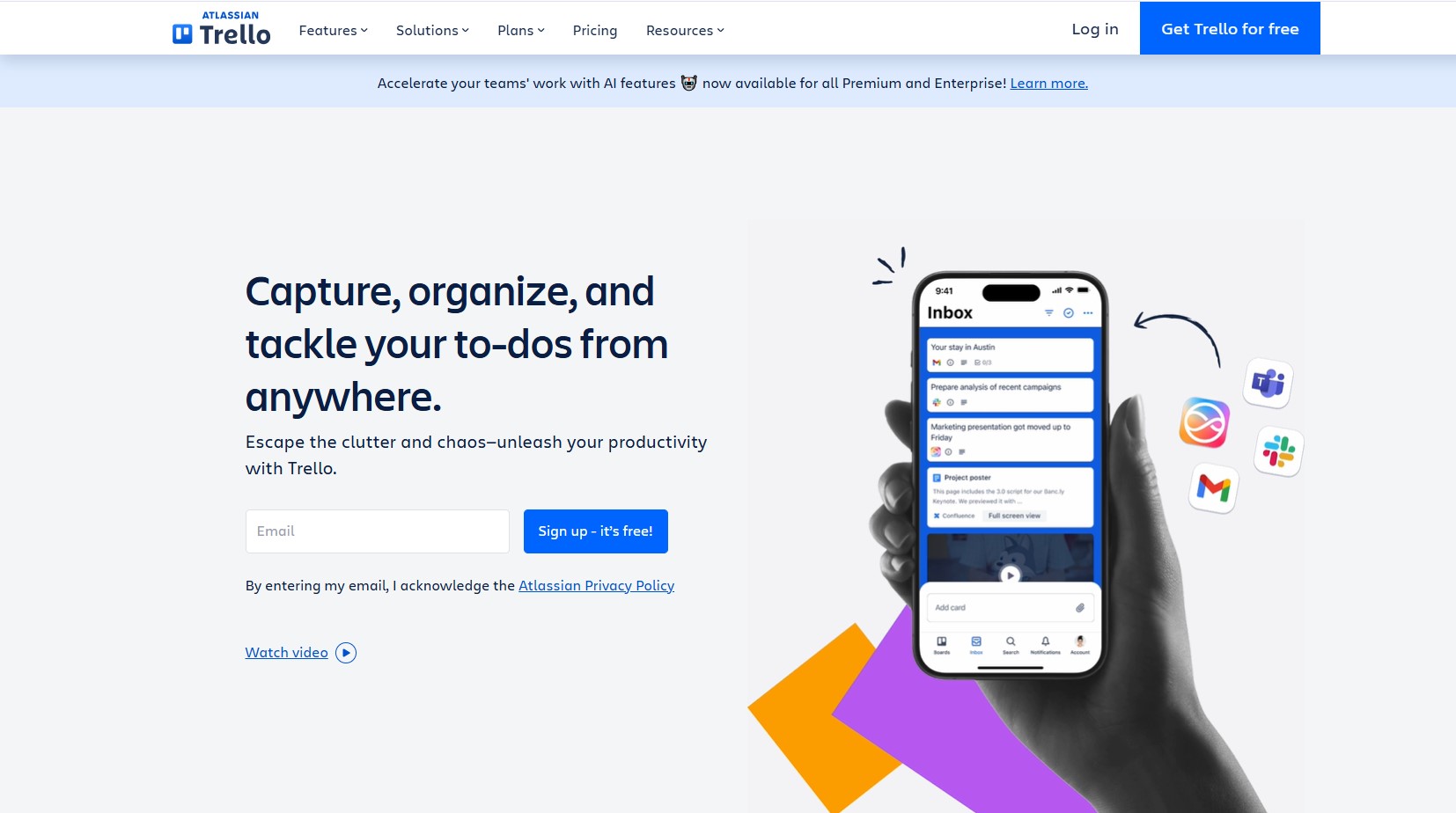
Trello AI refers to the artificial-intelligence-enhanced features now integrated into Trello, the visual work-management tool owned by Atlassian. Rather than being a standalone generative product, Trello’s AI capabilities — delivered through Atlassian Intelligence — help users create, refine, and organize work more efficiently by reducing manual effort and increasing clarity across boards, cards, and tasks. This solves long-standing productivity problems such as turning raw ideas into actionable tasks, summarizing notes, improving text quality, and extracting priorities from messy inputs, so teams spend less time on administrative work and more time on execution.
Who owns Trello AI and the company behind it
Trello AI is developed by Atlassian Corporation Plc, a major enterprise software company best known for collaboration and development tools including Jira, Confluence, Bitbucket, and Trello. Atlassian has embedded its broader Atlassian Intelligence platform across Jira, Confluence, and Trello, making AI a native part of how users interact with work items as part of cloud subscriptions.
How Trello AI actually works
Under the hood, Trello AI uses natural-language understanding and machine learning models to interpret the content you write and offer context-aware suggestions and transformations. Within a card’s description or comments, users can invoke AI to generate text, improve spelling and grammar, summarize long content, extract action items, or brainstorm ideas based on brief prompts. In other workflows, AI can parse forwarded emails or Slack messages, extract due dates or tasks, and pre-populate boards in structured ways (for example via experimental features like board builders). AI is activated via a button in the card editor or by entering prompt commands, making it part of regular task and content workflow.
Real-world use cases and how professionals use it today
In practice, Trello AI is used by product teams and project managers to draft clearer task descriptions and checklists, by marketing teams to summarize meeting notes into concise action items, and by remote or hybrid teams to turn messy raw text from messages or email forwards into organized cards and priorities. Users also experiment with AI to generate entire boards tailored to personal goals (e.g., seasonal “New Year’s Resolution Board Builder”) and to extract structured plans from unstructured input.
Current pricing plans in 2026 (free, paid, enterprise)
Trello AI features are now part of Trello’s paid tiers. AI text generation, editing, summarizing, and action-item extraction are included for users on Standard, Premium, and Enterprise plans; Workspace admins can enable or disable AI at the org or workspace level. Free trello owners can start a 14-day Premium trial to test AI features, but ongoing access to native AI content capabilities requires a paid plan. Pricing for Trello generally scales by subscription level and user count, with higher tiers offering broader board views, automation quotas, and AI integration allowances.
How pricing compares to competitors
Compared with tools that bundle deep predictive AI or workflow automation (e.g., ClickUp’s AI suite or Asana’s generative assistant), Trello’s AI is more focused on content refinement and task extraction rather than broad forecasting or automated scheduling. Competitors may offer more advanced natural-language planning or predictive timeline generation, but Trello retains a simpler, flexible visual board model with AI helping primarily in content interpretation and task structuring, often at a lower overall cost for teams already within the Atlassian ecosystem.
Who should use Trello AI and who should not
Trello AI is ideal for teams and individuals who use Trello to manage tasks, projects, and workflows and who want AI assistance in writing, summarizing, and extracting structured tasks from unstructured input. It’s particularly valuable for content-heavy boards, distributed teams, and knowledge workers who receive work requirements from email or chat. It’s less appropriate for teams that require deep predictive analytics, machine-learning forecasting, or automated dependency planning — functions better served by platforms like ClickUp AI or monday.com AI with broader generative planning capabilities.
Strengths, limitations, and realistic drawbacks
A key strength of Trello AI is its seamless integration into the existing board/callback model, letting users generate and refine text where work is actually happening. It also helps teams speed up communication and reduce manual task breakdowns. Limitations include a narrower scope of AI capability — Trello doesn’t yet offer predictive scheduling, resource optimization, or fully autonomous workflow generation — and its AI functions are primarily text-centric rather than modeling or forecasting oriented. Some users also note that while AI improves content quality, highly complex project plans still require hands-on structuring beyond what AI can generate automatically.
How Trello AI is being used in businesses and teams
Teams integrate Trello AI into daily workflows such as meeting follow-ups, backlog refinement, sprint planning, and personal productivity routines. AI assists in creating card descriptions, refining narrative content, extracting action items after meetings, and reducing administrative overhead. Some organizations use AI to pre-populate boards from raw text sources like emails or chats, ensuring important tasks aren’t lost in communication noise. AI features are administratively managed so that enterprise workspaces can tailor access and rollout to their governance needs.
Why Trello AI matters in the AI landscape in 2026
By 2026 the shift toward AI-assisted productivity means that simple content refinement and task extraction are core expectations in work tools rather than optional add-ons. Trello AI matters because it enhances a ubiquitous visual project management platform with contextual intelligence that reduces friction in task definition and communication — a persistent bottleneck for distributed teams. Its integration reflects how collaboration tools are evolving from static boards to context-aware, suggestion-driven workflows that help teams do more with less manual effort.
A concise final verdict written like a human expert
In 2026 Trello AI — powered by Atlassian Intelligence — adds useful, practical intelligence to an already popular project management tool, helping users generate content, summarize discussions, extract action items, and turn unstructured input into structured work. It does not yet rival full AI planning or forecasting suites in scope, but its tight integration with boards and cards makes everyday productivity easier for many teams. For organizations that need deep scheduling optimization or predictive resource planning, complementing Trello with other solutions may be necessary, but for teams focused on clarity, content quality, and reducing manual overhead, Trello AI delivers measurable improvements to workflow and communication.