
What SEOmonitor AI is and what problem it solves in 2026
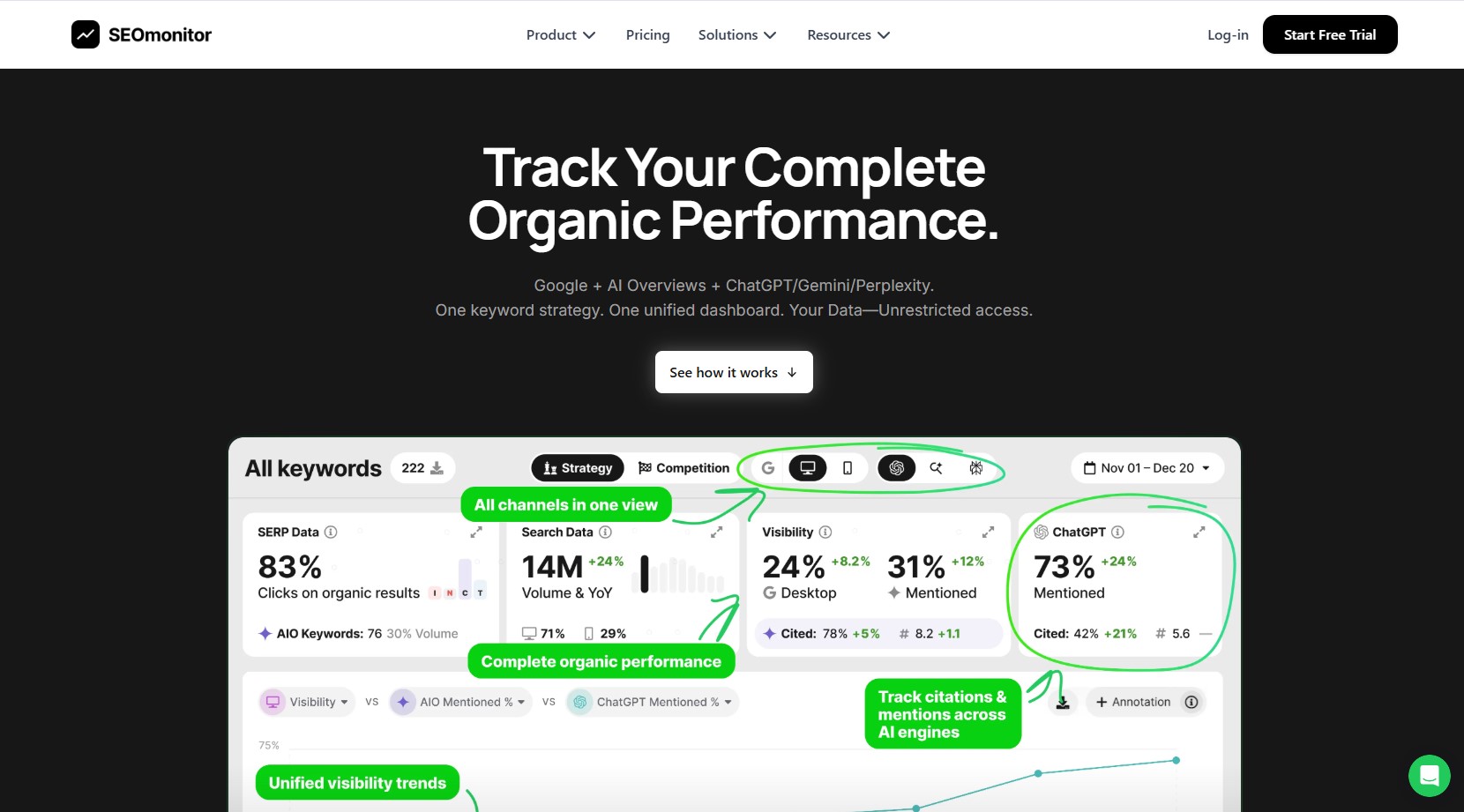
SEOmonitor AI refers to the artificial‑intelligence‑enabled capabilities within the SEOmonitor platform, a SaaS solution focused on enterprise‑level SEO performance tracking, unified organic visibility, and AI‑augmented search analytics. Instead of treating traditional search ranking and AI discovery signals as separate datasets, SEOmonitor uses AI to unify rankings, AI search visibility (including AI Overviews and chatbot responses like ChatGPT/Gemini/Perplexity), and content performance into one strategic framework. This matters in 2026 because the search landscape is increasingly fragmented across classic SERPs and generative AI surfaces — and teams need coherent, data‑driven insights that span all these discovery channels without manual fragmentation or guesswork.
Who owns SEOmonitor AI and the company behind it
SEOmonitor AI is developed by SEOmonitor, a European‑origin SEO technology company that has evolved into a unified search performance platform used by digital agencies, in‑house SEO teams, and enterprise brands worldwide. It has become notable for combining rank tracking data with AI visibility and automated content intelligence to help organizations prove ROI, forecast impacts, and measure organic performance across emerging AI search formats. The core product remains under the SEOmonitor brand and is widely rated by users for agency and enterprise use.
How SEOmonitor AI actually works
SEOmonitor AI synthesizes search engine ranking data with AI search visibility metrics and machine‑assisted content workflows. Its unified dashboard tracks Google rankings, AI Overview presence, and mentions/citations in LLM‑based answers (such as ChatGPT, Gemini, and Perplexity) using the same keyword sets so that SEO outcomes are consistent and comparable. Unlike older tools that require separate “prompt” tracking, SEOmonitor uses keyword‑based metrics that automatically cover thousands of AI‑related prompts tied to real demand, reducing noise and aligning reporting across platforms. On the content side, its AI Content Writer uses your keyword data to discover opportunities, generate strategic outlines and articles, and then automatically track performance in both classic rankings and AI‑generated results, integrating quality validation and brand voice learning into the workflow.
Real‑world use cases and how professionals use it today
SEOmonitor AI is widely used by digital marketing agencies to build data‑backed pitches, forecast SEO impact, and win client revenue commitments with business‑case builders that project traffic and revenue outcomes. In‑house teams use it to monitor daily rankings and AI search visibility trends, benchmark competitors across traditional and AI search surfaces, and allocate content efforts based on demand and difficulty scores. The AI Content Writer accelerates content creation by suggesting topics with real ranking potential, drafting optimized text with built‑in fact‑checking and SEO scoring, and then tracking how those assets perform across both SERPs and AI answer results over time.
Current pricing plans in 2026
SEOmonitor’s pricing is tiered but data‑centric, reflecting usage of keyword tracking, AI search visibility tracking, and AI content quotas. Starter plans begin around €99 per month for basic rank tracking and a 1,000‑keyword campaign, with AI Content Writer credits included. The Pro tier, popular with agencies and brands, starts at roughly €299 per month and supports expanded keyword tracking (from thousands up to hundred‑thousands depending on configuration), AI Search Keyword tracking (for unified visibility across Google, AI Overviews, and chatbots), unlimited users, API access, and native dashboard connectors. A separate “Writer‑Only” plan (starting ~€25) focuses on content generation. Pricing is flexible: you choose daily tracked keywords, AI Search Keywords, and AI article quotas based on need.
How pricing compares to competitors
Compared with broad SEO suites like Semrush One or Ahrefs, SEOmonitor’s pricing is competitive for data‑volume and AI visibility tracking because it includes unlimited users, API access, and a unified organic performance view without seat‑based charges. Where competitors often add AI‑search tracking as costly add‑ons, SEOmonitor bundles unified AI visibility alongside rank tracking and content generation within configurable plans. For organizations focused on agency reporting and cross‑platform visibility, this often delivers more data for the budget than similarly priced all‑in‑one platforms.
Who should use SEOmonitor AI and who should not
SEOmonitor AI is ideal for digital agencies, in‑house SEO teams at enterprise and mid‑market brands, and consultants who need cohesive visibility metrics across traditional and AI search and want to build data‑backed business cases. Its unified dashboard and AI Content Writer empower teams to forecast impact, create optimized content, and prove SEO’s contribution to revenue. It’s less suitable for solo bloggers or small businesses with minimal SEO budgets or teams that only need basic ranking metrics, where lightweight or entry‑level SEO tools may offer better cost‑to‑feature ratios.
Strengths, limitations, and realistic drawbacks
SEOmonitor AI’s strengths include its unified organic performance view, volume‑weighted AI search visibility metrics, unlimited API and user seats, and the fact that both rank tracking and AI content generation work off the same keyword strategy. Its AI Content Writer goes beyond generic text writing by using real SEO demand signals, fact‑checking, and brand voice learning. Limitations include the complexity of usage‑based pricing, which requires careful quota planning across keyword sets and AI content credits, and a learning curve for teams new to unified AI search visibility metrics. Some advanced forecasting and AI co‑pilot style prescriptive insights remain in development compared with tools focused solely on AI analytics.
How SEOmonitor AI is being used in businesses and teams
In practice, SEOmonitor AI is integrated into quarterly planning, competitive benchmarking, and performance reviews. Agencies use its dashboards to illustrate how rankings, AI citations, and brand mentions move together, while in‑house teams tie this data to broader digital KPIs like traffic, engagement, and conversions. Content teams evaluate topic demand and forecasted impact before production; technical teams use opportunity scoring and intent data to prioritize efforts; and executives use unified forecasting and performance export reports to connect SEO outcomes with business goals.
Why SEOmonitor AI matters in the AI landscape in 2026
By 2026, search visibility can no longer be understood solely through classic SEO metrics because AI‑generated answers play a substantial role in user discovery, often reducing click‑through rates for traditional rankings. SEOmonitor matters because it bridges traditional and AI search visibility — showing not just where content ranks but how and where it is cited or mentioned in AI responses — enabling more strategic decisions that align with modern search behavior. Its unified organic performance reporting helps mitigate blind spots in reporting and demonstrate SEO value across all relevant discovery channels.
A concise final verdict written like a human expert
SEOmonitor AI in 2026 is a comprehensive SEO performance platform that effectively blends traditional rank tracking with AI search visibility and content intelligence, offering a data‑driven, unified view of organic performance across fractured search environments. Its flexible pricing and focus on keyword‑centric metrics make it attractive for agencies and enterprise teams who need to prove ROI and adapt strategies to evolving search surfaces like AI Overviews and generative chat responses. Although the usage‑based pricing requires thoughtful planning, its unlimited users, rich forecasting, and integrated AI features give teams a competitive advantage in understanding where and how their content truly ranks and influences discovery.