
What Hotjar AI is and what problem it solves in 2026
Hotjar AI is the artificial-intelligence-augmented component of the Hotjar Experience Analytics platform, designed to make customer behavior research faster, more actionable, and easier for teams without deep analytics expertise. At its core, Hotjar has long provided tools like heatmaps, session recordings, funnels, and surveys that show what users do on your site and why they do it — bridging quantitative analytics with qualitative insights. In 2026 the AI layer, often referred to as a research assistant, automates tasks such as generating survey questions based on research goals and summarizing open-ended responses, delivering insights that once took hours of manual analysis. This helps teams spend less time parsing raw data and more time acting on user feedback and behavior signals.
Who owns Hotjar AI and the company behind it
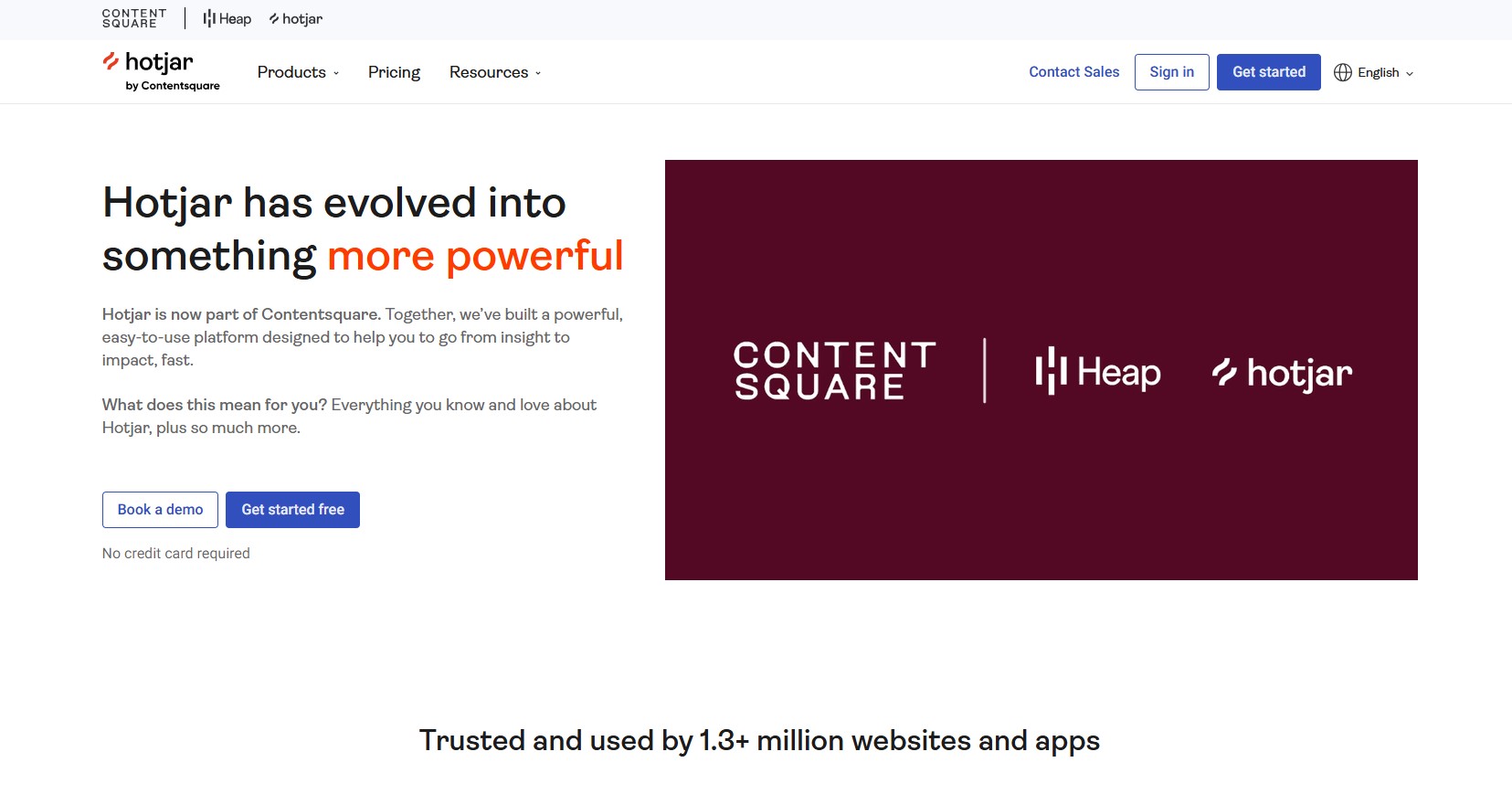
Hotjar AI is part of Hotjar, which has evolved into a full experience insights platform following its acquisition by Contentsquare, a digital experience analytics company. Hotjar continues as a key product in the Contentsquare ecosystem, combining behavior analytics (Observe), feedback mechanisms (Ask), and user research tools (Engage) into an integrated suite for understanding and improving user experience.
How Hotjar AI actually works
Hotjar AI functions as an assistant layer integrated with Hotjar’s existing feature set. For surveys, it can create relevant questions automatically based on a user-defined goal — for example prompting users to explore checkout pain points — removing much of the guesswork in research design. After responses are collected, it automatically analyzes and summarizes open-ended answers, highlights notable findings and supporting quotes, and can offer actionable recommendations, saving hours that would otherwise be spent reading and categorizing free-text responses manually. Beyond surveys, the AI logic underpins pattern detection and trend summaries across session recordings and user behavior data, helping teams identify friction points and drop-offs more efficiently.
Real-world use cases and how professionals use it today
Product teams use Hotjar AI to quickly design user research instruments that align with product hypotheses without needing a dedicated UX researcher. Marketing teams embed AI-generated surveys into conversion funnels to uncover why users abandon forms or pages. UX analysts use automated summaries to synthesize sentiment from qualitative feedback, turning qualitative data into presentable insights for stakeholders without manual coding. Agencies leverage Hotjar alongside tools like Google Analytics or Mixpanel to marry behavioral patterns with AI-generated explanatory summaries for client reporting.
Current pricing plans in 2026 (free, paid, enterprise)
Hotjar’s pricing tiers reflect both usage and AI capabilities. A Free plan allows up to ~200,000 monthly sessions with core analysis tools like heatmaps, session replay, funnels, and standard filters. The Growth plan starts at about $49/month (annual billing), adding AI insights such as Sense (Contentsquare’s AI assistant) and enhanced session summary features. Above that, Pro and Enterprise plans are custom-quoted for high-traffic sites and organizations needing advanced behavior quantification, extended data retention, and enterprise-grade support. All plans typically include collaboration features and integrations, with higher tiers unlocking more AI-enhanced summaries and guided insights.
How pricing compares to competitors
Compared with full enterprise analytics suites like Adobe Analytics or Mixpanel — which bundle deep predictive AI modeling, multi-channel attribution, and BI reporting — Hotjar’s pricing is more accessible for small to mid-sized teams. Its free tier gives a strong starting point, and entry paid plans include AI-enabled insight assistants without separate credit costs. Against primarily UX-focused competitors (e.g., Microsoft Clarity), Hotjar’s paid plans add richer behavioral and feedback analysis and more matured AI assist features, but the overall cost can be higher than free options that lack AI summarization and guided survey generation.
Who should use Hotjar AI and who should not
Hotjar AI is suited for product managers, UX designers, marketers, and growth teams who want actionable research outcomes without manual labor. It’s highly valuable where qualitative feedback and behavior insights are critical to optimization decisions. It’s less appropriate for enterprise data science teams that require deep predictive modeling, advanced segmentation with AI forecasting, or cross-platform data blending — scenarios better served by tools like Amplitude AI or Adobe Analytics AI.
Strengths, limitations, and realistic drawbacks
Hotjar’s strengths include intuitive visual insights, integrated survey and feedback tools, and AI-assisted research workflows that reduce manual analysis. The AI capabilities are practical and focused rather than full generative analytics engines — they automate survey creation and summarization rather than, for example, naturally interact with entire datasets via conversational queries. Limitations include less emphasis on deep predictive analytics, limited granularity in custom AI filter creation, and potential performance impact on page load if not implemented carefully. Some teams also find that manually interpreting recordings remains time-intensive despite summarization features.
How Hotjar AI is being used in businesses and teams
In real workflows, Hotjar AI is embedded into UX research sprints, optimization experiments, and stakeholder reporting cycles. Teams launch AI-generated surveys early in product iterations to gather user sentiment, then use automated summaries to inform design decisions and prioritization. Insights from session recording patterns help inform A/B testing hypothesis generation. Hotjar’s AI summaries and trend highlights are often exported or integrated with Slack and collaboration tools to synchronize insights across teams.
Why Hotjar AI matters in the AI landscape in 2026
In 2026, understanding user intent and refining digital experiences is increasingly competitive, and tools that reduce cognitive load and manual grunt work are essential. Hotjar AI matters because it represents a middle ground between raw behavior capture (heatmaps, recordings) and complex analytics platforms — giving teams qualitative context backed by AI-assisted interpretation without requiring specialized analysts. It democratizes UX research and behavioral insights at scale.
A concise final verdict written like a human expert
Hotjar AI in 2026 is a practical enhancement to a widely used experience analytics platform, blending traditional behavioral capture with AI-assisted research workflows. It shines for teams that need to create surveys quickly, summarize open-ended responses, and identify key patterns in user behavior without deep analytics expertise. While it doesn’t replace full generative AI analytics suites, its guided insights and automation shorten research cycles and bridge the gap between what users do vs. why they do it. For product and marketing teams seeking actionable UX insights without heavy technical overhead, Hotjar AI delivers a balanced, user-centric analytics experience that fits both small teams and growing enterprises.