
What Heap Analytics AI is and what problem it solves in 2026
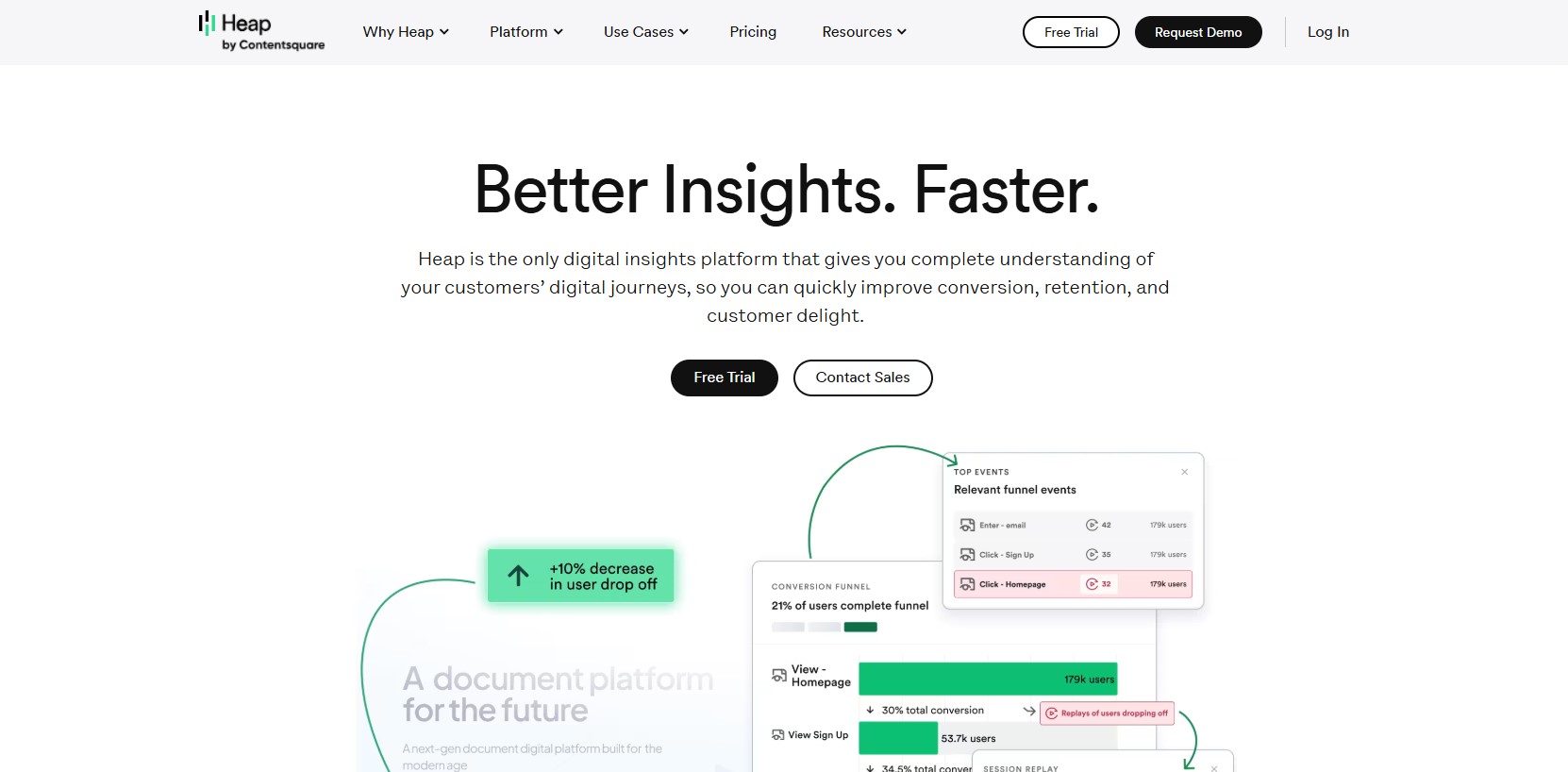
Heap Analytics AI refers to the artificial‑intelligence‑enhanced analytics capabilities now embedded within Heap — a digital insights and product analytics platform that automatically captures user behavior across web and mobile apps and uses AI to make analysis accessible, faster, and more actionable. In 2026, analytics teams face vast behavioral datasets that are difficult to query manually; Heap AI addresses this by allowing users to interact with their analytics in plain language, generate charts and summaries automatically, and uncover insights without deep SQL or BI expertise. Its AI features reduce the learning curve and accelerate data‑driven decision‑making across product, marketing, and experience teams.
Who owns Heap Analytics AI and the company behind it
Heap Analytics — including its AI components — is developed by Heap, Inc., a company focused on automatic behavioral analytics that captures every user interaction by default, eliminating the need for manual tagging. Heap was acquired by Contentsquare, and the combined platform blends Heap’s quantitative analytics with Contentsquare’s experience‑centric tools like session replay and zoning, strengthening its AI‑augmented data insights capabilities.
How Heap Analytics AI actually works
Heap AI consists of generative and machine‑learning capabilities layered on top of Heap’s auto‑captured behavioral dataset. Its flagship AI assistant — often branded as Sense or AI CoPilot — lets users ask questions in natural language and automatically returns appropriate charts, segment breakdowns, descriptions, and follow‑up suggestions. The system interprets queries, builds visualizations, generates plain‑English summaries of insights, and suggests next exploratory questions to deepen analysis. AI components can also automate chart titling, highlight key filters or groupings, and personalize iterative analysis paths based on past interactions. Data privacy is maintained by performing the actual analysis within Heap rather than exposing raw customer data externally.
Real‑world use cases and how professionals use it today
Product teams use Heap AI to identify where users are dropping off in onboarding flows without manually structuring segments or funnels. Marketing teams ask direct questions like “why did engagement spike last week?” and receive instant visualizations and explanations. Business analysts rely on the AI to summarize patterns and suggest follow‑up explorations, while non‑technical stakeholders leverage plain‑language querying to stay informed without developer support. Teams also share auto‑generated charts and descriptions with cross‑functional partners, accelerating collaboration and reducing dependencies on centralized data teams.
Current pricing plans in 2026
Heap’s pricing is tiered and usage‑based, tied to session volume and feature access rather than a fixed seat model. The Free plan supports basic analytics with data history and includes Heap’s core AI assistance on limited data volumes (up to ~10,000 monthly sessions). The Growth tier adds unlimited users, AI‑powered assistant features, and expanded reporting with longer data history. Pro and Premier tiers (custom‑quoted pricing) include enterprise‑grade analytics, Sense/AI CoPilot on larger datasets, session replay add‑ons, and advanced behavioral targeting, with integration options for warehouses and personalized customer support.
How pricing compares to competitors
Compared with self‑serve analytics tools or simpler AI analytics add‑ons, Heap’s pricing is higher entry but justified by its deep product analytics capabilities and automatic data capture. It typically costs more than lightweight analytics tools but is competitive with enterprise‑oriented platforms like Amplitude or Adobe Analytics for large volumes of behavioral data — particularly when teams value AI‑assisted insights and natural‑language querying. Smaller teams may find simpler tools more cost‑effective, while larger organizations benefit from Heap’s comprehensive dataset and AI capabilities.
Who should use Heap Analytics AI and who should not
Heap Analytics AI is ideal for product managers, growth marketers, UX researchers, and analytics teams that need fast behavioral insights without heavy technical overhead. It’s particularly valuable for organizations with complex digital products or mobile apps where user journeys are multifaceted. Heap is less appropriate for very small websites or teams that need only basic traffic metrics, as simpler analytics tools might suffice without the cost or complexity. It also may not be the best choice for teams that prioritize fine‑grained attribution modeling or deep enterprise BI workflows, where dedicated BI platforms or custom data warehouses excel.
Strengths, limitations, and realistic drawbacks
Heap’s strengths lie in its auto‑capture of behavioral data, AI‑powered natural‑language querying, auto‑generated summaries and follow‑ups, and reduced dependency on engineers for analysis. The built‑in AI makes insights more accessible and collaborative. Limitations include pricing complexity tied to session volumes, a learning curve around properly structuring analyses even with AI help, and the fact that true predictive or forecasting AI features are more limited compared with full BI/ML platforms. Some teams report that extensive event noise from automatic capture may require filtering to focus only on meaningful signals.
How Heap Analytics AI is being used in businesses and teams
In practice, teams integrate Heap AI into weekly product reviews, customer journey analysis sessions, and sprint retrospectives. Analytics leaders automate routine questions with Sense so that regular reporting takes less manual effort. Cross‑functional workflows often embed AI‑generated insights into dashboards and presentations to align product, design, and marketing decisions. Some organizations also use Heap’s data in combination with external warehouses and data science tools to augment long‑term forecasting and machine‑learning workflows.
Why Heap Analytics AI matters in the AI landscape in 2026
By 2026, analytics must be both fast and accessible to empower agile decision‑making in competitive digital environments. Heap Analytics AI matters because it lowers the barrier to complex behavioral insights, enabling non‑technical users to interact with rich datasets through natural language and surfacing actionable patterns quickly. Its integration of AI summary, follow‑up prompting, and automated chart creation reflects a broader shift where analytics tools serve both data novices and experts without heavy training.
A concise final verdict written like a human expert
Heap Analytics AI in 2026 is a versatile, AI‑augmented product analytics platform that transforms raw user behavior into actionable insights without deep technical expertise. Its natural‑language querying, auto‑generated summaries, and iterative follow‑ups make it compelling for teams looking to democratize analytics and accelerate decision cycles. While pricing can be higher than basic tools, the depth of behavioral insight and AI assistance justifies the investment for product, growth, and experience teams who need real, contextual intelligence at scale. For simpler web traffic needs or projects centered solely on traditional metrics, lightweight alternatives may be more cost‑efficient.