What Clicky AI is and what problem it solves in 2026
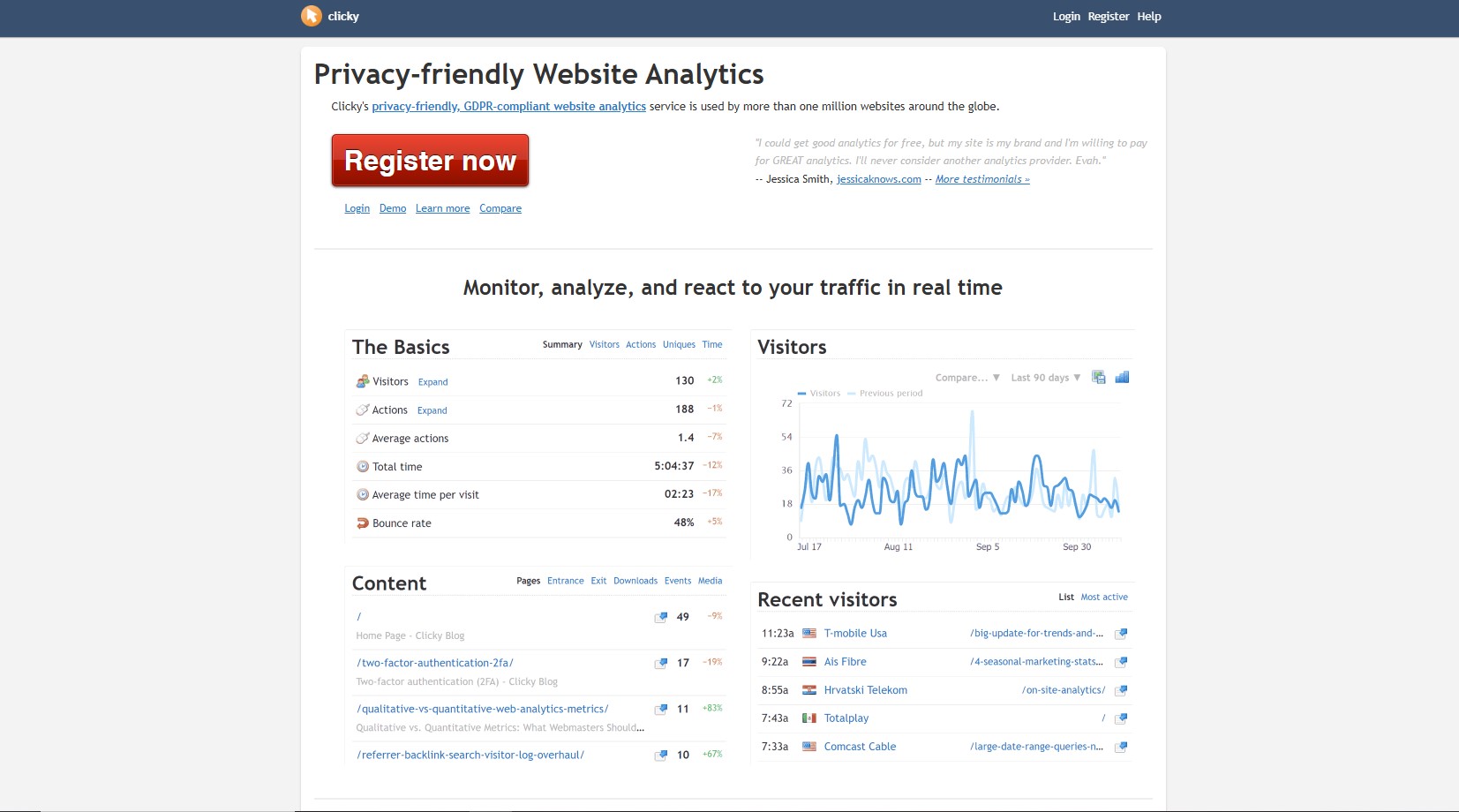
Clicky is a web analytics platform focused on real-time, privacy-friendly tracking of site traffic and visitor behavior. It’s widely used as a simpler, more transparent alternative to heavy enterprise analytics tools. As of 2026, Clicky does not market a separate “AI analytics” product with generative insights or predictive modeling, but its core analytics capabilities — like advanced bot filtering, real-time trends, anomaly alerting, and pattern detection — leverage algorithmic processing that can be described as automation rather than true generative AI. In practice, Clicky helps teams quickly monitor visitors, actions, conversions, and campaign impact without the latency or complexity of traditional batch analytics. For many organizations, this solves the persistent problem of delayed insights, bloated dashboards, and intrusive tracking systems by offering an easier, privacy-preserving alternative that gets to the signal fast.
Who owns Clicky and the company behind it
Clicky is owned and operated by Clicky Analytics, Inc., a standalone analytics provider that has been developing its platform as a cloud-hosted service used by more than one million websites globally. It positions itself as a privacy-compliant analytics solution with GDPR-ready tracking that avoids personal data collection and cookies by default, which appeals to privacy-conscious web teams.
How Clicky AI actually works
While Clicky doesn’t currently include a branded generative AI interface or natural-language insights panel like some enterprise tools, it does use algorithmic logic and automated analytics workflows to provide actionable data. The platform’s real-time engine collects visitor and action logs, referrer sources, campaign tags, bounce rates, goals, and conversion data without cookies, then applies filters to remove bots and spam. These filters use pattern detection to reduce noise and present meaningful human session data — a form of intelligence that automates what would otherwise be manual noise-removal work. Clicky’s dashboards update continuously, and users can set alerts and thresholds so they are notified when key metrics change — essentially automated anomaly detection without manual SQL querying.
Real-world use cases and how professionals use it today
Marketing teams use Clicky to track campaign performance and measure goal completions in real time. SEO analysts monitor inbound traffic sources, bounce rates, and visitor paths to identify content that’s under-performing. Product teams use heatmaps to visualize user interaction with key pages, and operations teams embed uptime monitoring to know when sites go offline. Agencies adopt Clicky as a lightweight alternative to Google Analytics that respects privacy laws and doesn’t require cookie banners. Small businesses and startups often choose Clicky because it’s easier to implement and interpret than high-end analytics suites.
Current pricing plans in 2026 (free, paid, enterprise)
Clicky has a tiered pricing model with both free and paid plans. New accounts start with a 21-day premium trial, after which users can remain on a limited free plan that tracks one site with up to 3,000 daily page views. Paid plans include Pro ($9.99/month), Pro Plus ($14.99/month), and Pro Platinum ($19.99/month) with increasing daily page view limits and features like heatmaps and uptime monitoring. Custom enterprise plans can support tens of millions of daily views across hundreds of sites with negotiated pricing. Annual billing reduces costs significantly compared to monthly billing.
How pricing compares to competitors
Clicky’s pricing is modest and predictable compared with enterprise analytics suites like Adobe Analytics or Google Analytics 360, which often require customized contracts and significant spend. Against privacy-first competitors like Plausible or Fathom, Clicky’s tiered page-view limits and feature set make it competitive for small to mid-sized teams, though some rivals offer broader privacy-first dashboards or simpler pricing tied purely to monthly usage. Clicky’s cost advantage is strongest for teams that need real-time, granular data without enterprise-scale contracts.
Who should use Clicky AI and who should not
Clicky is well-suited for small to medium business owners, marketers, SEO professionals, and agencies who need real-time insights without complex setup or data privacy concerns. It’s especially relevant when teams want visibility into visitor behavior, heatmaps, goals tracking, and uptime monitoring without pervasive user profiling. It’s less appropriate for large enterprises requiring advanced predictive analytics, deep AI-generated insights, or full multi-channel BI integrations, which are better served by platforms such as Adobe Analytics or BI systems with integrated AI forecasting.
Strengths, limitations, and realistic drawbacks
Strengths of Clicky include its real-time analytics engine, privacy-first design, simplicity, affordability, and transparent pricing. The dashboard shows live visitor activity, segment filters, and detailed interaction data more intuitively than many traditional analytics tools. Limitations include a lack of deep predictive AI features, natural-language query interfaces, or advanced cohort modeling found in higher-end platforms, meaning strategic forecasts and automated recommendations must be done externally. While Clicky performs bot filtering and automated calculation of metrics, it does not currently offer true generative AI insights.
How Clicky AI is being used in businesses and teams
In practice, teams use Clicky embedded within weekly marketing reviews, performance reporting, and campaign optimization cycles. Developers check uptime alerts post-deployment, analysts use real-time dashboards to monitor traffic spikes or dips, and content teams assess it to understand what drives engagement. Some teams use Clicky’s API to export data into internal dashboards or BI tools for deeper analysis, while others stick with its native real-time interface for daily decisions.
Why Clicky AI matters in the AI landscape in 2026
By 2026, web analytics must handle both traditional human traffic and traffic influenced or initiated by AI agents, search assistants, and generative discovery tools. Clicky’s lightweight, performant analytics engine — while not generative AI — provides clean, real-time, privacy-compliant insight that many teams use as a baseline for deeper analysis. In an era of data privacy and AI search algorithms, having analytics that accurately represents real human engagement without invasive tracking is increasingly valuable.
A concise final verdict written like a human expert
In 2026, Clicky remains a practical, real-time web analytics platform that appeals to teams prioritizing privacy, simplicity, and immediate visibility. While it does not offer a branded AI analytics assistant or deep generative features, its automated processing, bot filtering, and live dashboards give clear, actionable insights that reduce manual noise and accelerate decision cycles. For small to mid-sized businesses, agencies, and marketers who want privacy-compliant, straightforward analytics without enterprise pricing or complexity, Clicky is a solid choice. Teams needing predictive models, natural-language insights, or cross-channel AI intelligence will still need more advanced platforms alongside Clicky.