What Salesforce Einstein AI is and what problem it solves in 2026
Salesforce Einstein AI refers to the comprehensive suite of artificial-intelligence capabilities built directly into the Salesforce Customer 360 platform — now often surfaced through Einstein Copilot, Einstein GPT, and Agentforce 360 — designed to make customer relationship management smarter, more automated, and deeply contextualized. Instead of siloed reports and manual CRM tasks, Einstein AI uses unified CRM and Data 360 customer data to generate insights, automate workflows, personalize customer interactions, and even execute tasks on behalf of users. It addresses the persistent enterprise problem of fragmented customer data, slow manual processes, and limited prediction capacity by embedding AI throughout sales, service, marketing, commerce, and operations workflows so teams can focus on strategy and relationships rather than administrative overhead.
Who owns Salesforce Einstein AI and the company behind it
Salesforce Einstein AI is developed by Salesforce, Inc. (NYSE: CRM), the world’s leading customer relationship management (CRM) platform headquartered in San Francisco. Salesforce has expanded Einstein from a set of predictive features into a broad, enterprise-grade AI ecosystem, integrating generative capabilities, conversational assistants, and autonomous AI agents directly into its CRM clouds and the Salesforce Platform. Over time, Salesforce has re-branded and extended its AI offerings — including Einstein Copilot, Copilot Studio, Prompt Builder, Model Builder, and the Agentforce 360 platform — to deliver contextual intelligence and automation tied to CRM data while maintaining enterprise-grade trust and security.
How Salesforce Einstein AI actually works
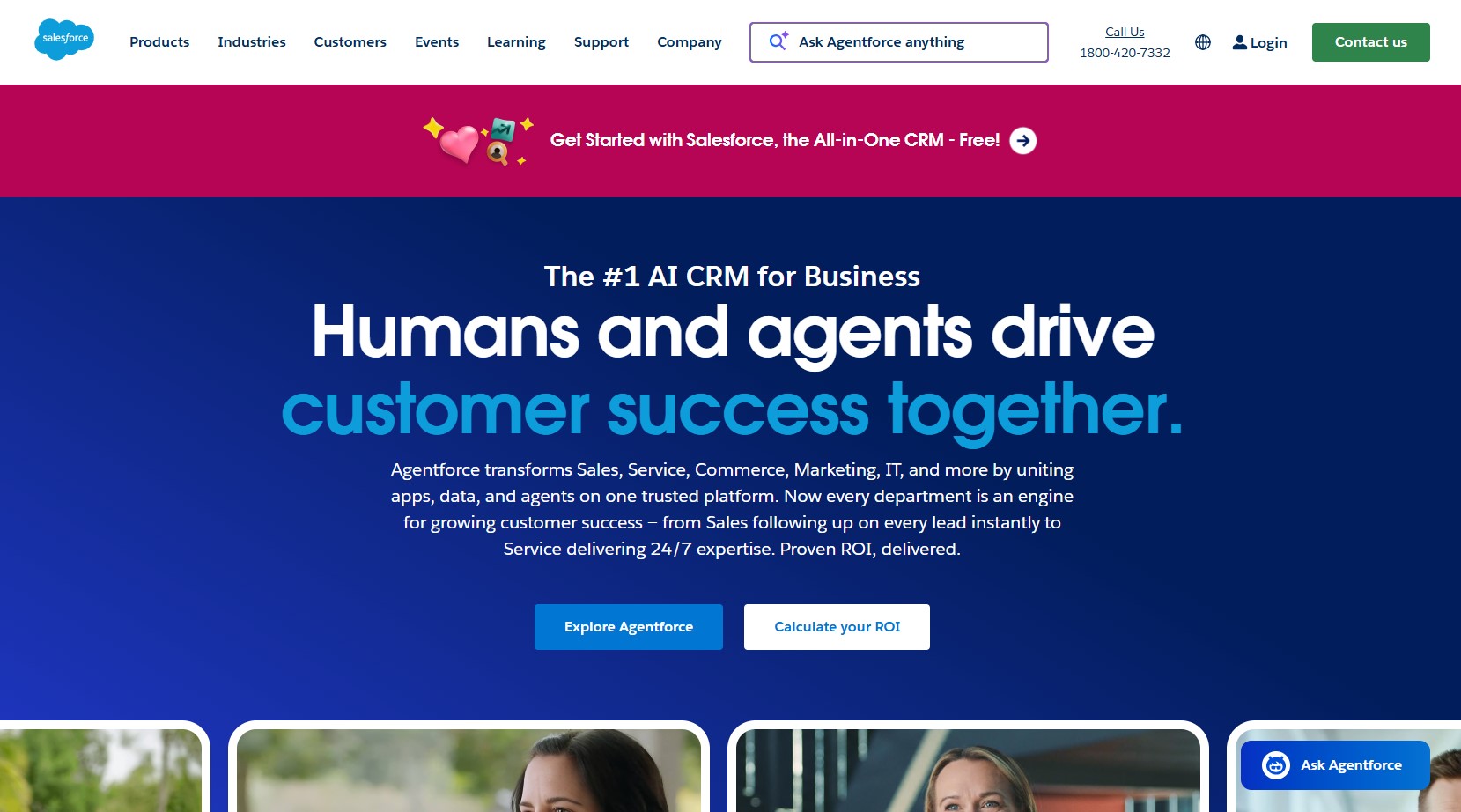
Einstein AI operates by leveraging a unified customer data layer (Salesforce Data 360) and machine-learning, natural language processing, and generative models to power intelligence throughout the CRM. At a foundational level, Einstein ingests structured CRM records (leads, opportunities, cases, orders) and activity data (email, calendar events, support calls) and combines it with external signals to build predictive models, personalized recommendations, and generative outputs. The Einstein Trust Layer — a secure AI architecture built into the platform — ensures AI responses are grounded in a customer’s own data with privacy controls, PII masking, and audit logs. Core interfaces include Einstein Copilot, a conversational assistant that answers questions and drafts content in natural language; Prompt Builder, which lets admins create and reuse prompt templates; and Agentforce 360, which orchestrates autonomous AI agents that can proactively execute tasks, automate workflows, and engage customers or employees on behalf of users. Salesforce also supports bring-your-own AI models alongside native models so enterprises can customize the intelligence that runs their workflows.
Real-world use cases and how professionals use it today
Sales teams use Einstein AI to auto-generate sales emails, score leads by likelihood to close, and recommend next steps in deal progression. Service teams use AI to summarize case histories, automate replies across channels, and classify support tickets for faster routing. Marketing teams deliver AI-driven segmentation and personalized campaign content, and commerce teams leverage product recommendations and customized buyer experiences. Autonomous AI agents can monitor data, coordinate across systems, and even close repetitive tasks without manual intervention. These capabilities reduce manual CRM data entry, shorten response times, and let teams act on insights delivered in the flow of work rather than through disjointed dashboards.
Current pricing plans in 2026 (free, paid, enterprise if applicable)
Einstein AI doesn’t exist as a single SKU with a public list price; instead, its capabilities are bundled with Salesforce product editions and add-on licenses. Core Einstein features are tied to specific clouds (Sales Cloud, Service Cloud, Marketing Cloud) and generally require Enterprise or higher editions. More advanced generative and agentic capabilities are licensed through Agentforce and Copilot-inclusive editions, with example pricing for Service Cloud AI around $125 per user per month for generative replies, summaries, routing, and intelligence features. Many AI features also consume usage credits for data processing and real-time personalization, and enterprises often negotiate pricing that includes seat licenses, AI usage bundles, Data 360 credits, and professional services. This layered pricing model means total costs depend on required AI scope, cloud usage, seat counts, and data volume rather than a single product price.
How pricing compares to competitors
Compared with competitors like Microsoft Dynamics 365 Copilot or Adobe Sensei, Salesforce’s pricing is more modular and tied to its CRM ecosystem. Microsoft’s Copilot features may be bundled into existing Dynamics or Microsoft 365 licenses, while Salesforce separates AI-enabled capabilities as add-ons or higher tiers plus usage-based credits, which can make total cost less predictable but more customizable for enterprise workloads. Salesforce’s deep platform integration typically justifies its pricing for organizations that need full cross-cloud personalization, automation, and data-driven customer intelligence at scale; simpler or smaller teams may find other platforms more cost-efficient if advanced AI is not mission-critical.
Who should use Salesforce Einstein AI and who should not
Einstein AI is ideal for mid-sized to large enterprises with complex CRM needs — especially those in sales, service, marketing, ecommerce, and customer experience functions that can benefit from predictive scoring, generative content, and autonomous AI agents. Companies with established CRM data practices and governance can best leverage Einstein because AI outcomes improve with rich, unified data. It’s less appropriate for small businesses or simple CRM users who do not yet use Salesforce’s core clouds, as the licensing and implementation costs may outweigh benefits if advanced AI capabilities are under-utilized.
Strengths, limitations, and realistic drawbacks
Strengths of Salesforce Einstein AI include deep integration with CRM and customer data, enterprise-grade security and trust controls, predictive analytics, generative content capabilities, and autonomous AI agents that can act across workflows. Its open platform supports bring-your-own models and connectors to other AI ecosystems. Limitations include complex pricing and licensing structures, dependency on data quality and governance, and the significant professional services often needed for complex deployments. Some enterprises also report that AI adoption can lag behind expectations due to ROI ambiguity and decision fatigue among users evaluating multiple AI options.
How Salesforce Einstein AI is being used in businesses and teams
In real business environments, Einstein AI powers automated sales forecasting, real-time service routing, churn prediction, personalized marketing journeys, and autonomous customer service agents that interact with customers or internal teams around the clock. Large brands embed Einstein AI into dashboards, digital assistants, and customer portals, using it to shorten sales cycles, improve first-contact resolution, and automate high-volume, low-complexity interactions, freeing employees to focus on high-value tasks.
Why Salesforce Einstein AI matters in the AI landscape in 2026
By 2026 AI has transitioned from optional analytics to core enterprise intelligence, and Salesforce Einstein AI matters because it integrates predictive, generative, and autonomous capabilities directly into the world’s most widely adopted CRM platform. Its focus on trusted AI grounded in customer data while maintaining privacy and governance controls addresses a key enterprise need for accuracy, compliance, and relevance — enabling organizations to scale personalization, automate operations, and derive business outcomes from AI rather than just metrics.
A concise final verdict written like a human expert
In 2026 Salesforce Einstein AI represents a mature, enterprise-class AI ecosystem that embeds intelligence into every aspect of the CRM lifecycle — from predictive lead scoring and service case automation to generative content creation and autonomous AI agents. Its strengths lie in integration with unified customer data, security-built trust layers, and flexible AI builders that let businesses tailor capabilities to their workflows. While pricing and licensing can be complex and adoption requires thoughtful planning, Einstein AI delivers real business value for organizations seeking to modernize sales, service, marketing, and customer engagement at scale within the Salesforce ecosystem.