
What INK AI is and what problem it solves in 2026
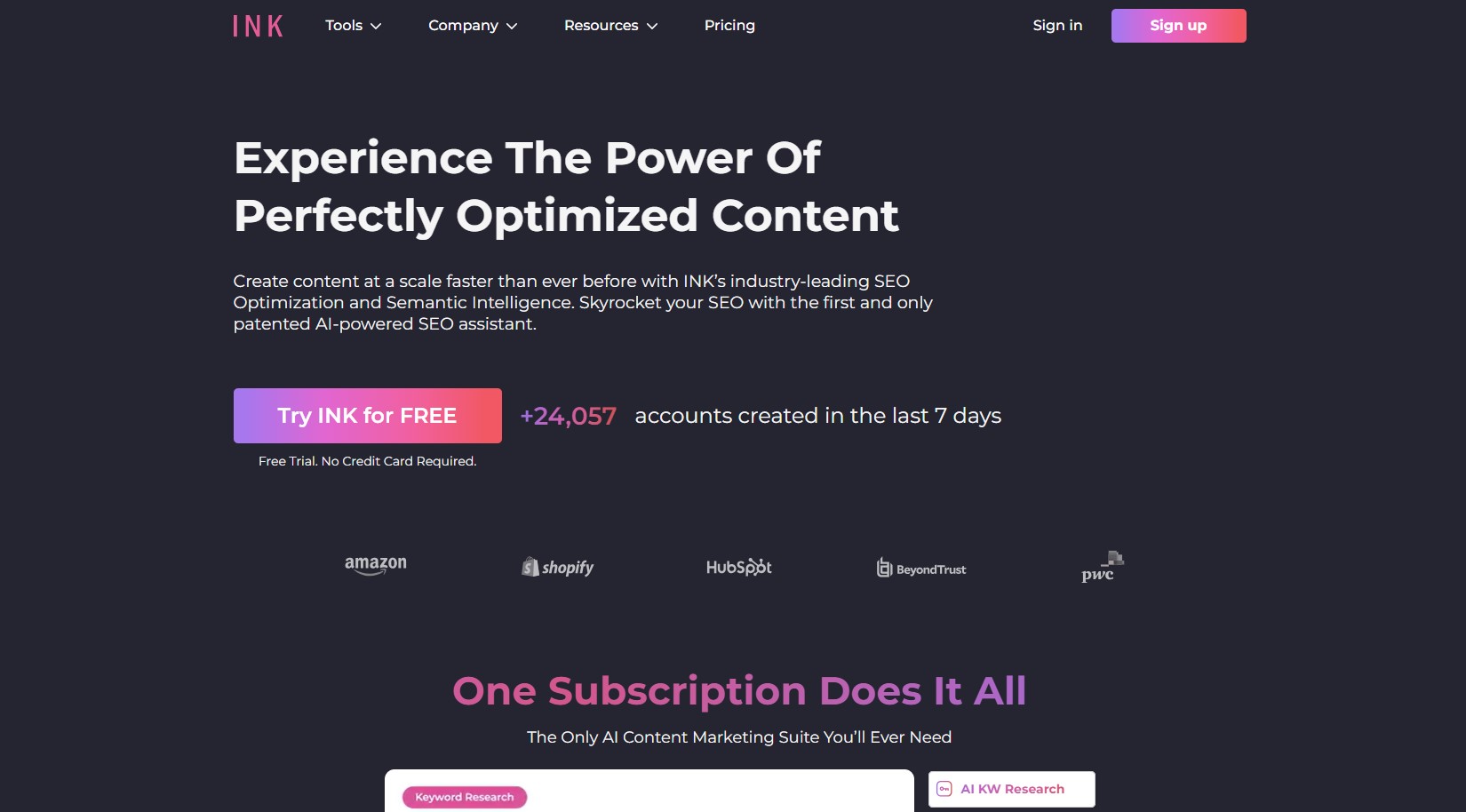
INK AI (often branded as INK For All or simply INK) is a comprehensive AI-driven content creation and optimization platform that helps writers, marketers, and SEO professionals generate and publish content that performs well in search engines and engages audiences. It combines AI-powered writing, real-time SEO scoring, keyword research and clustering, content performance guidance, and brand protection features into a single suite accessible via a web application. The tool addresses two core problems in digital content workflows: reducing the time and effort required to produce high-quality SEO content, and improving the discoverability and rankings of that content in organic search results. Users can create long-form articles, marketing copy, and visual assets from text prompts, with guidance on on-page SEO and structural improvements that align with Google’s evolving ranking criteria.
Who owns INK AI and the company behind it
INK AI is developed by The INK Company, Inc., a privately held software company founded in 2019 and headquartered in Houston, Texas. The company operates with a relatively small team focused on AI content technologies and semantic SEO optimization, and its leadership and early technical contributors include industry professionals such as Alexander De Ridder and Gary Haymann. The platform has grown steadily in user adoption among content creators, agencies, and teams seeking deeper SEO insights integrated with AI-generated content workflows.
How INK AI actually works
At its core, INK uses a combination of proprietary AI models and Natural Language Optimization (NLO) technologies to produce and refine content that aligns with real-world search queries and user intent. Users typically start by inputting a topic, keyword, or basic prompt into the editor. From there, the platform’s AI Writer generates drafts, while built-in tools like the SEO Optimizer score content based on keyword relevance, readability, structure, and search intent. Keyword research and clustering tools help map related terms and topical relevance, enabling content creators to build “topic authority.” Many versions also include real-time audience insight features that adjust copy recommendations dynamically based on competitive and intent data. Some features guide users on structural elements such as headings and metadata, helping improve on-page SEO without requiring specialized expertise. The integration of image generation from text prompts further supports visual content inclusion alongside written copy.
Real-world use cases and how professionals use it today
Professionals rely on INK for a range of content tasks. Digital marketing teams use it to scale blog and landing page production while keeping SEO scores high. Freelancers and agency writers use its keyword clustering and writing templates to reduce research time and ensure coverage of relevant search terms. SEO specialists leverage the scoring and optimization feedback to refresh aging content that is close to ranking but missing key elements. Some teams import published content into INK to audit and re-score it for stronger search performance before republishing. Visual content creation features are used to embed relevant graphics directly into articles or posts without switching between tools. For enterprise teams, the collaboration features support workflow management across writers and editors.
Current pricing plans in 2026
As of early 2026, INK’s pricing structure is anchored around two primary subscription plans with a free trial available: a Professional tier priced at around $39 per month when billed annually and an Enterprise tier at about $99 per month with additional team seats, advanced management features, and premium support. Both plans include AI writing, SEO optimization, image generation, keyword research, and access to templates and community resources. The free trial typically offers a limited word quota (e.g., 10,000 words for initial evaluation) without requiring credit card information.
How pricing compares to competitors
In the broader AI content and SEO tool landscape, INK’s pricing is mid-range compared to both pure AI writers and full SEO suites. Tools that focus solely on AI writing without SEO optimization may start lower but lack semantic optimization features. Full SEO platforms with content modules often start at higher price points with broader analytics and site-wide audit capabilities. INK’s value proposition centers on integrating writing and SEO guidance in one platform, which can be more cost-effective for users focused primarily on optimized content creation rather than full technical SEO audits.
Who should use INK AI and who should not
INK is well-suited for content marketers, SEO professionals, freelance writers, agencies, and small to mid-sized business teams that produce regular search-driven content and want integrated SEO optimization within their workflow. It is particularly useful for those who lack deep SEO expertise but still need to generate content that can compete in search rankings. It may be less appropriate for organizations requiring advanced site-wide SEO auditing, backlink analysis, and broader marketing automation—capabilities typically found in specialized enterprise SEO platforms. Similarly, users needing highly tailored AI models trained exclusively on proprietary corporate data may find INK’s general models limiting without custom API solutions.
Strengths, limitations, and realistic drawbacks
INK’s strengths include its integrated SEO and content creation workflow, real-time optimization guidance, and support for visual content via AI image generation. It helps reduce repetitive tasks and lowers the barrier to publishing search-optimized content. Limitations include a moderate learning curve for users unfamiliar with SEO concepts, occasional over-emphasis on optimization scores at the expense of creative writing quality, and support limited largely to email and community forums rather than 24/7 enterprise help. Some real-world reviews note that certain detection or protection features don’t always perform consistently, and the evolving nature of search algorithms can make optimization promises less predictable.
How INK AI is being used in businesses and teams
In businesses, INK is deployed to streamline editorial workflows, ensure consistent SEO standards across writers, and reduce dependency on separate keyword research or SEO audit tools. Teams coordinate through the platform’s workspace to assign tasks, review optimization scores, and export content directly to CMS platforms like WordPress. Agencies use it to maintain brand voice consistency for multiple clients and to track performance improvements. Some organizations embed INK into content calendars and planning cycles, using keyword cluster maps to inform monthly topic strategies.
Why INK AI matters in the AI landscape in 2026
By 2026, the AI content space has matured, and tools that combine content generation with meaningful SEO guidance stand out. INK matters because it bridges the longstanding divide between creative writing and search performance optimization, offering a unified platform that reduces manual SEO tasks. Its focus on semantic relevance and real-time feedback aligns with search engines’ increasing emphasis on user intent and content quality, making it a practical choice for teams balancing productivity with discoverability.
A concise final verdict written like a human expert
INK AI in 2026 is a practical, SEO-centric content platform that serves a clear niche between basic AI writers and expansive SEO suites. For professionals whose primary goal is producing content that ranks and engages, it delivers meaningful integration of writing, optimization, and workflow tools at a competitive price. It isn’t a replacement for deep SEO audit software or custom AI modeling, but for most writers and marketers, it accelerates output and improves search performance without requiring separate subscriptions to multiple tools. Its real value lies in helping teams consistently produce optimized content while reducing repetitive SEO tasks, though users should set realistic expectations around optimization scores and the evolving nature of search engines.